Foreign Friends.Friendship of Peoples, Between Ideals and Reality
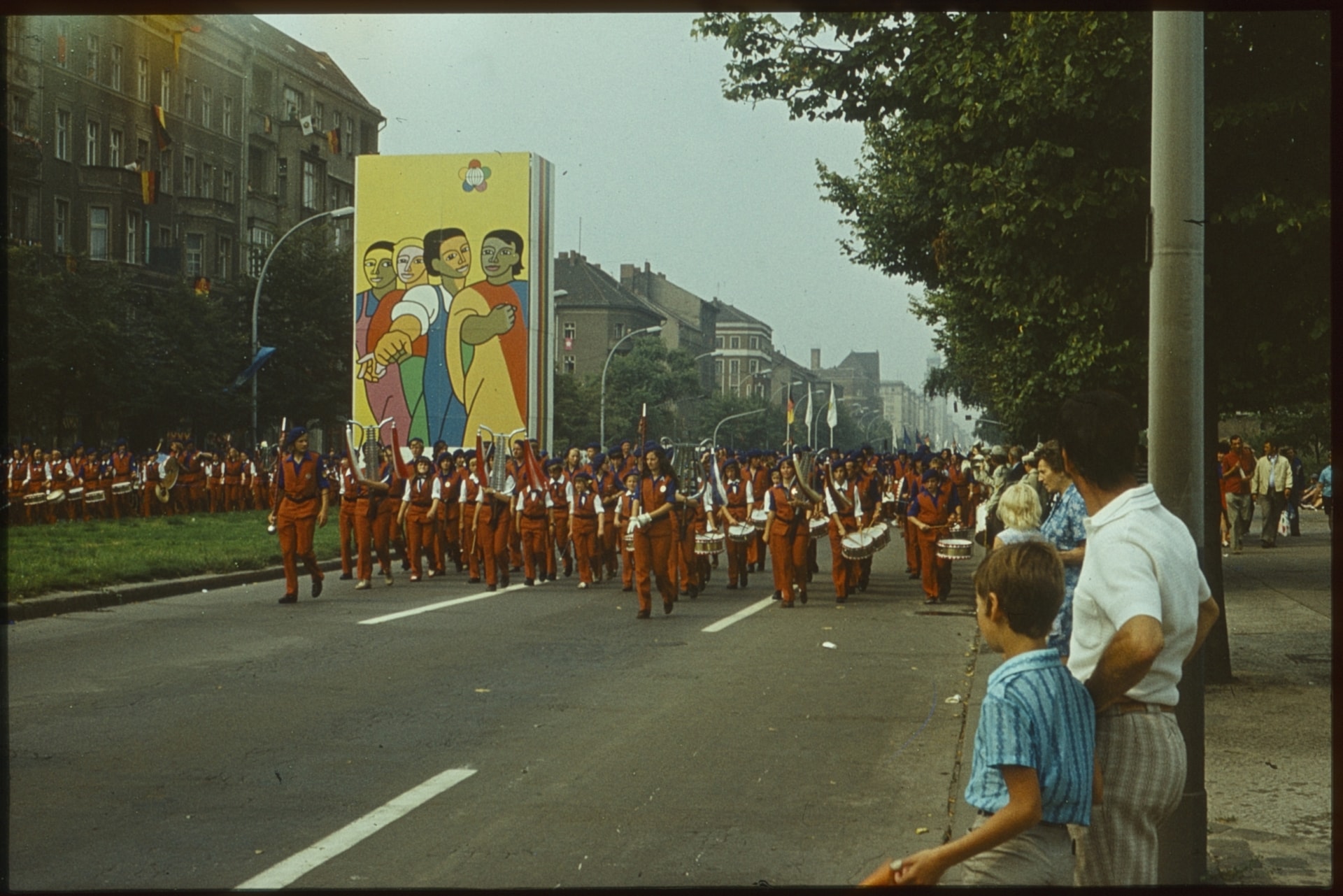
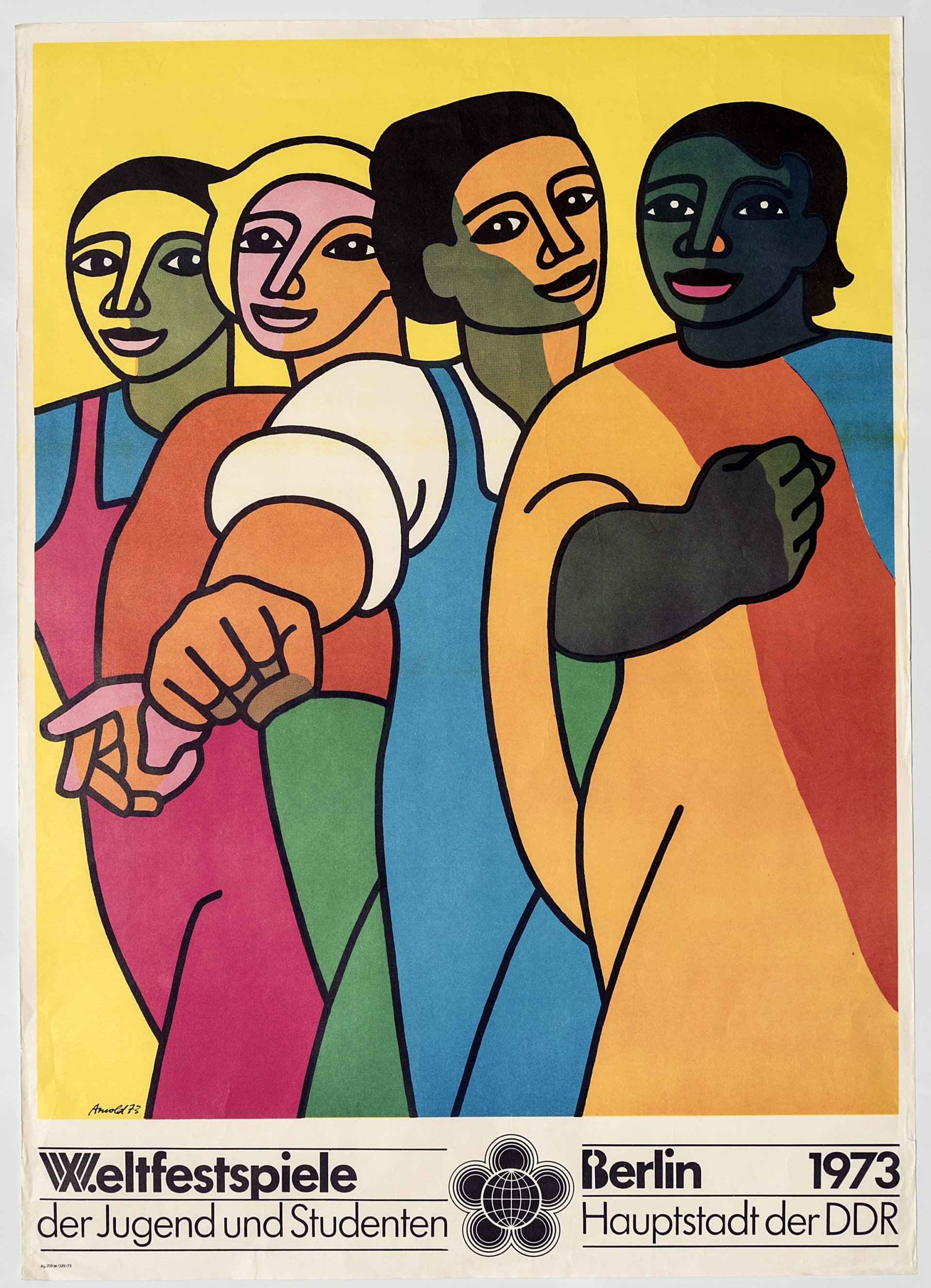
Friendship! – a recurring slogan in the official lexicon of the German Democratic Republic. In the early postwar years, socialism as a global movement is both an ideology and a hopeful promise. The commitment to international solidarity and the friendship of peoples shapes global policies as much as people’s everyday lives.
The still-young GDR seeks transnational alliances, in part to bolster its own legitimacy. The country cultivates political, economic, and cultural relationships with countries such as Vietnam, Egypt, and Cuba, many of which have only recently emerged from colonial rule. State-orchestrated declarations of solidarity permeate everyday life in schools, workplaces, and leisure activities. Yet, the persistence of racist imagery and violence is rarely questioned, even as attacks on people arriving through labor agreements, among other routes, escalate in the 1980s.
The exhibition investigates the contradictions of the often-invoked friendship of peoples, drawing on the museum’s collection: be it imported consumer goods, children’s literature, teaching materials, paintings, or sculptures – racist representations and exclusion are as much present as calls and tangible attempts to challenge them. The museum’s holdings primarily tell of the everyday life of a society imagined as white, while voices of people with a history of migration remain largely absent. These issues are addressed and explored in greater depth through workshops, panel discussions, and guided tours of the collection and linked to contemporary experiences.


This exhibition was created in cooperation with